Do you feel safe enough to be yourself in your relationship?

There is a moment I see often with couples in my coaching sessions.
One partner is trying to say something vulnerable. Maybe she is hurt. Maybe he is afraid. Maybe one of them has been carrying something for days or years and has finally gathered the courage to bring it into the conversation.
They are seating next to each other on my couch, they begin to speak, and within a few seconds the other partner is explaining.
“That’s not what I meant.”
“You’re taking it the wrong way.”
“But you do the same thing.”
And there it goes.
The conversation may continue for another few minutes or longer, perhaps an hour if i would let them, but the vulnerable moment has already passed. The person who opened is no longer really opening. They are now defending their right to feel what they feel.
This is where I stop a couple.
Hold on.
What just happened here?
Because on the surface, they are discussing a comment, a tone of voice, something forgotten, a message that was not answered, a change of plan.
Yet the reaction is much bigger than the event. One person is suddenly angry, the other is shutting down, and both are beginning to wonder whether they can ever communicate.
So I ask them to slow everything down, and to rewind the conversation.
What was actually said?
What did your mind make it mean?
What happened in your body?
What were you afraid was about to happen?
This is usually where we discover that the conversation was never only about the comment.
One person heard, “You are not good enough.”
The other heard, “I cannot depend on you.”
Someone felt controlled, abandoned, criticised, rejected, dismissed or suddenly very alone.
A small moment touched a much older place.
And now two adults who love each other are no longer speaking only from the present. Their entire history has quietly entered my coaching room.
We talk a lot about vulnerability, but very little about what makes it possible
People are often told that they need to open more, communicate more, share their feelings and let their partner see the real person underneath the defences.
Yes, of course.
But vulnerability cannot be ordered.
The body does not open because someone says, “You can tell me anything.”
It opens after enough lived experiences have shown that telling the truth will not destroy the connection.
This is what emotional safety in a relationship is really made of. It grows in ordinary moments, usually the ones nobody photographs or posts about.
You tell your partner that something hurt, and they remain with you long enough to understand it.
You admit that you made a mistake, and the mistake is addressed without your entire character being put on trial.
You ask for space, and the space is not interpreted as abandonment.
You say no, and love does not suddenly disappear from the entire space.
There may still be discomfort. There may be disagreement. Your partner may need a moment to regulate themselves. Safety does not mean two people becoming endlessly calm and agreeable.
It means the relationship is not constantly being put at stake whenever something difficult appears.
That is a very different thing.
I have worked with couples who barely argue and do not feel safe at all. They have simply learned which subjects cannot be touched.
Everything looks peaceful as long as nobody tells the full truth.
That is not intimacy. It is a carefully managed distance.
The question beneath many relationship problems
When a couple comes to me with recurring conflict, I am interested in the conflict, of course. The practical issue matters.
If someone is repeatedly unreliable, that matters.
If there has been lying, that matters.
If one partner becomes cruel, contemptuous or intimidating, we do not spiritualise it and call it a simply a childhood wound. A boundary is needed. At times, constructive distance is needed. A person does not have to remain in a harmful conversation to prove that they are conscious.
But once the immediate boundary is clear, I want to know something else.
Why does this particular behaviour have so much power here?
What does it touch?
What story begins running the moment it happens?
This is where we move below the tip of the iceberg.
A husband being late may look like a problem with punctuality. For his wife, it may land in a much deeper place: “I cannot rely on the man beside me. I have to hold everything myself.”
Her disappointment then arrives with an intensity that he experiences as criticism and shame. He no longer hears, “I need reliability.” He hears, “You are inadequate.”
He withdraws or becomes defensive, which makes him even less available. She feels even less safe and pushes harder.
Now they have a loop.
The more she tries to create safety through pressure, the less safe he feels.
The more he tries to escape shame through withdrawal, the less safe she feels.
They are both trying to protect themselves, and their protection is creating the very experience they fear.
This is the kind of thing we need to see, because you cannot change what you cannot see.
We may choose a partner to give us the safety we never had
We like to believe we choose a partner because they make us feel safe.
And perhaps they do, in many ways.
Yet attraction is mysterious. We are not only drawn toward what is good for us. We are also drawn toward what we recognise because it feels familiar.
A person who had to work hard for love may feel an enormous pull toward someone who is difficult to reach.
Someone raised around emotional unpredictability may feel strangely at home with a partner whose warmth comes and goes.
A person who never felt fully chosen may fall deeply in love with someone who cannot quite choose.
Why?
Because part of us is not merely looking for love. It is looking for a different ending to an old story.
This time, perhaps, I will finally be chosen.
This time, if I love well enough, give enough or explain myself clearly enough, the person will stay.
This time, I will receive the safety I missed.
It makes so much sense. There is nothing ridiculous or weak about it.
But look at the impossible position and the duality we create.
We choose someone who activates an old insecurity, and then we make that person responsible for removing it completely.
When they fail, and every human being will fail to make us feel perfectly safe, the wounded part of us says, “You see? I knew it.”
We begin collecting evidence.
The delayed message becomes evidence.
The wrong tone becomes evidence.
A distracted evening becomes evidence.
Their defensiveness becomes evidence.
etc.
Soon we are no longer observing the relationship as it is. We are using the relationship to confirm what we already fear.
This does not mean the evidence is always imaginary. There may be a real problem in front of us. Our personal work is learning to distinguish what is happening now from everything the present moment has awakened.
That distinction creates clarity.
Without it, fear becomes the narrator of the relationship.
Safety is also knowing that you will not abandon yourself
This is often the piece that surprises people when I explain it.
We usually think relational safety means knowing that our partner will not leave, betray, reject or hurt us.
Naturally, we want to trust the person with whom we share our life.
But there is another layer of safety that changes how we love:
I know that I will remain available and true to myself, even when the relationship becomes uncomfortable.
Think about what that means.
I can hear something difficult without immediately losing my centre.
I can want reassurance without chasing someone until they give it to me.
I can love my partner and still place a boundary around behaviour that diminishes me.
I can notice fear in my body without allowing fear to make every decision.
I can be disappointed without turning the disappointment into proof that I am unlovable.
I can stay connected without disappearing inside the connection.
When this inner safety is missing, we often try to create security by controlling the relationship. We monitor, test, analyse, pursue, withdraw, threaten or demand certainty.
Not because we are bad partners.
We are just so frightened.
We do not trust that we can hold ourselves if the answer is not the one we want or our partner can’t give what we need.
So perhaps one of the most important questions in a relationship is not only:
“Are you safe for me?”
It is also:
“How I can be here for myself when I do not feel safe?”
Because yes, at times your partner can support your safety. They can contribute to it enormously. They can also listen, repair, become more reliable, soften their tone, tell the truth and learn how to stay present.
But they cannot become the sole ground beneath your feet.
And now, turn the question around
This is something I often do in a session.
A client tells me, “I do not feel safe opening up to my partner.”
I listen. We look closely at what the partner is doing and whether there is a real lack of safety.
Then, when it is appropriate, I turn the question around.
How safe is your partner when they open with you?
It is an uncomfortable question, which is often why it is useful.
When your partner tells you that they are hurt, do you become curious, or do you immediately explain why they should not be?
When they make a mistake, do you address the mistake, or does your disappointment turn them into a disappointment?
When they are uncertain, do you give them room to understand what is happening, or do you push for an answer because their uncertainty is unbearable for you?
When they express a need you cannot meet, can both realities remain in the room without somebody becoming the villain?
Again, this does not mean endlessly accommodating someone who refuses responsibility.
Curiosity does not replace boundaries. No way.
But you can say, “That did not feel good, and I am not willing to continue this conversation in this tone.”
That is a boundary.
You might then add, “When we are both calmer, I would like to understand what happened to you there.”
That is a boundary with curiosity.
The two can coexist.
In fact, I think they must.
Without a boundary, we abandon ourselves. We go into self-betrayal.
Without curiosity, we reduce our partner to the worst thing they did while they were activated.
The body knows when love has become dangerous
You may be able to explain your relationship beautifully. You may know all the right language and understand every pattern intellectually.
Your body is having its own experience.
It knows whether you are constantly bracing.
whether you can rest beside this person.
whether you monitor your words before you speak.
and It knows whether you can be vulnerable and feels safe, whether receiving love feels safe.
This is why safety is not only a conversation. It is somatic. It has to be experienced repeatedly until the body begins to trust what the mind wants to believe.
And here is a question worth sitting with:
Are you afraid of your partner, or are you afraid of what closeness with your partner awakens in you?
Please do not answer too quickly. Take your time to reflect.
There are relationships where the person in front of you is feeling unsafe.
There are also relationships where the love is present, yet closeness activates an old expectation of loss, control, rejection or engulfment.
And of course, both can be true. Your history can be activated while your partner also has real work to do.
The goal is not to make everything your fault or your partner’s fault. It is to see clearly what belongs to you, what belongs to your partner, and what the two of you keep creating together.
That is how you both get your power back.
What are you teaching each other about love?
Every repeated interaction is teaching the body something.
When vulnerability is met with defence, the body learns to hide.
When a boundary is met with punishment, the body learns that honesty is dangerous.
When mistakes are repaired with accountability, the body learns that rupture is survivable.
When one partner can say, “Something is happening in me, and I do not want to make it a verdict about us,” the relationship becomes steadier.
When the other can respond, “Tell me more. I want to understand what this touched in you,” something inside that person softens suddenly.
This is how safety is built.
One moment, then another, and again and again.
Remember that we are human, so we are not looking for perfection here with the perfect word at the perfect moment. Nor promises that nobody can keep. But we are looking at two people becoming more conscious of what they bring into the space between them.
So perhaps, instead of asking only whether your relationship feels safe, begin here:
What happens between us when one of us is vulnerable?
Do we move closer to the truth, or do we protect ourselves from it?
What old story do we keep asking this relationship to resolve?
And what would become possible between us if neither of us had to abandon ourselves in order to stay connected?
That is where vulnerability begins.
And, very often, that is where love finally has enough room to breathe.
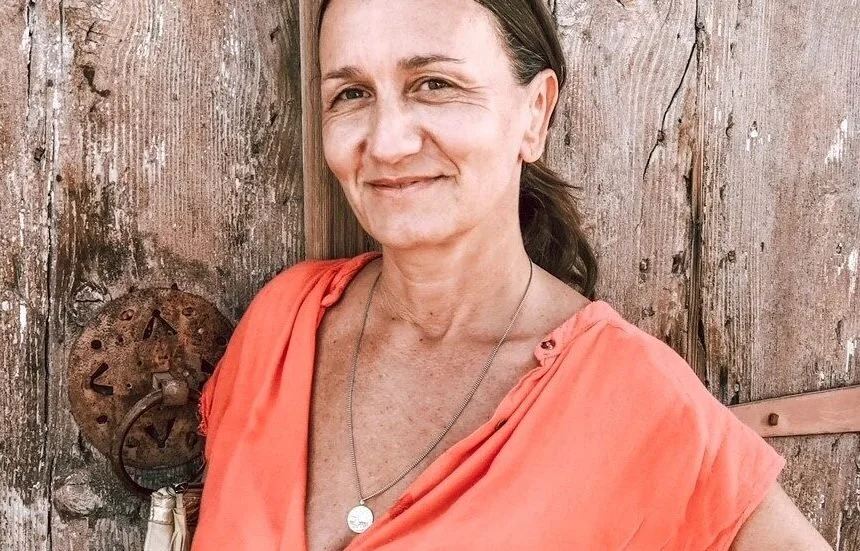
Written by Sophie Parienti.