
Can ChatGPT Be Your Therapist? The Risks of Using AI for Relationship Advice


I have started seeing something in my coaching sessions that I could not have imagined a few years ago.
Couples are bringing ChatGPT into their conflicts.
One partner asks it to explain what the other person is doing. The other partner does the same. They use it to interpret text messages, identify attachment styles, decide whether a behaviour is manipulative, write apologies, set boundaries, and sometimes even ask whether they should stay in the relationship.
And I understand why.
When you are hurt, confused, awake at 2 a.m. replaying a conversation and desperately trying to understand what just happened, having something available instantly that responds calmly and seems to make sense of the chaos can feel incredibly reassuring.
I use AI myself. I think it is an extraordinary tool.
But I have also watched something happen when people begin using AI as a therapist or relationship coach rather than as a tool to help them think.
ChatGPT can help you organize your thoughts, find language for something you are struggling to express, suggest questions to reflect on, or show you another possible perspective. But it only knows the relationship you describe to it, through the information you choose to give it.
That distinction matters much more than we may realize.
Because when we are hurt, none of us tells a completely neutral story.
We tell the story from inside our experience of it.
And if AI helps us make that story more articulate without helping us question the story itself, we can sometimes become more certain rather than more clear.
That is where I think we need to be careful.
What happens when AI enters a relationship conflict?
It started innocently enough with a couple I will call Nicole and Darren.
Nicole was exhausted after another spiraling conversation, one of those loops where both people were hurt and neither felt understood. In frustration, she typed her side of the conflict into ChatGPT:
“What should I say to my partner who keeps shutting down when I express a need?”
The answer was thoughtful. Calm. Articulate.
She copied part of it into a message to Darren.
Twenty minutes later, Darren replied:
“Well, I asked ChatGPT the same question, and it said something completely different.”
And there they were.
Two intelligent people who had begun by trying to understand each other were now armed with two beautifully written explanations of why each of them might be right.
The technology had not created their conflict.
But it had entered the conflict.
And that is a distinction I think we are going to have to learn how to navigate.
Welcome to the AI-mediated relationship
What happened between Nicole and Darren is something I am beginning to see more often.
One person brings a conflict to ChatGPT and receives an explanation that feels incredibly validating. The other person does the same and receives an equally convincing explanation of their experience.
Both come away feeling understood.
And sometimes, strangely, they understand each other even less.
The problem is not necessarily that AI gave either of them “bad” advice. There is something more subtle happening before the advice is even generated.
AI receives the story after we have already interpreted what happened.
That distinction is important.
Let’s say your partner becomes quiet during an argument.
You could tell ChatGPT:
“Every time I express my feelings, my partner shuts me out.”
Or you could say:
“When conflict becomes intense, my partner stops talking and says they need some time before continuing the conversation.”
Those two prompts may describe exactly the same moment.
But they are not telling the same story.
“Shuts me out” already contains an interpretation. Perhaps even an intention.
And this is something I spend a great deal of time helping people notice in my coaching work because we humans are meaning-making machines. Something happens, and almost immediately we begin deciding what it means.
They didn’t answer my message.
I’m not important.
They need space.
They’re pulling away from me.
They became defensive.
They don’t care how I feel.
Sometimes our interpretation is accurate. Sometimes it is partly accurate. Sometimes an old wound has entered the conversation before we even realize it.
Usually, there is more information to uncover.
A good coach does not only listen to the story you arrive with. I am also listening for the places where observation has quietly become interpretation.
I may stop you and ask:
What did they actually say?
What happened immediately before that?
What did you make their silence mean?
Have they told you that is what they meant, or is that the conclusion you reached?
What happened inside you when they did that?
And sometimes I will challenge the premise of the story itself.
Not because I don’t believe your experience.
Because helping you see something you cannot yet see may be far more useful than agreeing with everything you already believe.
The danger isn’t only bad advice. It’s confirmation.
This is where I think using ChatGPT for relationship advice becomes particularly interesting.
When we are hurting, we naturally tell the story from inside our own experience. We emphasize certain moments. We leave out others. We describe our partner through the meaning their behaviour has for us.
We may be completely sincere and still be giving an incomplete picture.
If I ask AI:
“Why does my emotionally unavailable partner punish me whenever I express a need?”
look at how much I have already decided before the answer even begins.
My partner is emotionally unavailable.
Their behaviour is punishment.
My need is the reason they are doing it.
Perhaps all three things are true.
But perhaps they aren’t.
The question itself deserves examination.
And this is one of the places where I believe human relationship work still matters enormously.
Sometimes the most useful response to your question is not an answer.
It is another question.
How do you know that is what your partner intended?
Or:
What if the story you are telling me is only one part of what is happening between you?
Those questions can be uncomfortable.
They can also be the beginning of clarity.
When the right words create the illusion of progress
There was something else happening between Nicole and Darren that I found even more interesting.
Their communication was beginning to sound better.
The messages were calmer. The language was more emotionally intelligent. There was more talk of boundaries, triggers, needs and accountability. If you had read some of their exchanges without knowing what was happening between them, you might have thought: These two are really doing the work.
But in our sessions, I could see that the relationship underneath those beautifully constructed sentences had not necessarily moved with them.
They were learning the language of insight faster than they were actually integrating the insight.
And I think this is one of the more subtle risks of using AI for relationship advice.
Knowing how to describe a pattern is not the same as changing the pattern.
You can understand that you have an anxious attachment response and still send the tenth message.
You can know that you need a boundary and still abandon it the moment your partner becomes upset.
You can send an exquisitely written message about your need for emotional safety while your body is terrified of what will happen when the other person reads it.
You can even write the perfect apology without yet being able to stay present with the pain your behaviour caused.
I see this distinction constantly in coaching.
Insight matters. Language matters. Understanding our patterns matters enormously. But there is another moment that interests me even more: What happens when the pattern is actually activated?
Can you notice what is happening inside you before you send the message?
Can you stay with the discomfort long enough to understand what you actually need?
Can you hear your partner’s experience without immediately preparing your defence?
Can you pause when every part of you wants to pursue, attack, explain or disappear?
That is where intellectual understanding begins becoming relational change.
At one point I said to Nicole:
“I don’t think you need another perfectly constructed explanation right now. I want to know what happens inside you before you start explaining.”
She became quiet.
And that silence told us considerably more than another paragraph could have.
AI can be extraordinarily helpful with words. It can help us organize our thoughts, reflect, prepare for a difficult conversation and sometimes even notice a perspective we had not considered.
But better language should help us return to the relationship, not become a substitute for being in it.
When AI starts mediating the relationship
I saw an even more complicated version of this with another couple I worked with. I’ll call them Jaya and Phoeneus.
They were trying to repair their relationship after infidelity, so there was already a great deal of hurt between them. Trust was fragile. Both were searching for clarity, reassurance and some way to communicate without creating another explosion.
Outside our sessions, they each began turning to ChatGPT for help processing what was happening and deciding how to respond to the other.
At first, this seemed useful.
Instead of firing off an angry WhatsApp message, they could pause, write down what they were feeling and ask AI to help them express it more calmly.
There is real value in that.
But gradually, something changed.
The messages became longer. More sophisticated. More psychologically informed. Each person could explain their wounds, triggers, boundaries and interpretation of the relationship with remarkable clarity.
And yet they were becoming less able to reach each other.
I remember reading some of their exchanges and thinking:
They aren’t talking to each other anymore. They are talking to each other’s trauma-informed avatars.
Every message had become a kind of case for the defence.
Here is my wound.
Here is your pattern.
Here is why my reaction makes sense.
Here is what your behaviour reveals about you.
The language sounded conscious, but underneath it I could still see two frightened people trying desperately to be understood.
This is something I think we need to watch as AI becomes part of how couples communicate.
Relationship language can become another form of armour
Words such as triggered, avoidant, narcissistic, trauma response, emotionally unavailable, gaslighting, boundary and attachment style can help us understand our experiences.
They can also become weapons when we use them to define the person standing in front of us.
Once I decide that my partner is “avoidant,” I may begin interpreting every request for space through that label.
If I decide they are “manipulative,” I may stop being curious about their intention because I believe I already understand it.
If I tell myself their behaviour is a “trauma response,” I may start analysing them rather than actually listening to them.
A label can give us language.
It can also make us feel certain.
And certainty is not always the same thing as clarity.
This matters even more after betrayal.
When trust has been broken, the person who has been hurt is often trying to make sense of a reality that suddenly feels less reliable. Questions multiply. What was true? What else don’t I know? Can I believe what I am hearing now? Am I foolish for staying? Am I abandoning myself if I leave?
The person who caused the hurt may also be trying to understand their behaviour, defend themselves from shame, repair the relationship or determine what they actually want.
That is already an extraordinarily complex conversation.
If both partners then begin bringing AI-generated interpretations of each other into the relationship, they can end up with more analysis and less contact.
With Jaya and Phoeneus, I eventually wanted to bring the conversation back to something much simpler.
Not:
What does ChatGPT think your partner’s behaviour means?
But:
What happened between the two of you?
What did it do to you?
What are you feeling now as you sit across from each other?
What needs to be acknowledged before either of you can move forward?
And perhaps most importantly:
Can you hear the answer without immediately building your response?
That is where the work became interesting again.
AI could help them prepare for the conversation.
But the relationship still had to happen between them.
What ChatGPT can help with in a relationship, and where its limits begin
I want to be clear about something: I am not against using ChatGPT for relationship advice.
I use AI myself, and I think it can be an extraordinary thinking tool when we understand what we are asking it to do.
If you have just had an argument and your thoughts are everywhere, ChatGPT can help you organize them. If you know what you want to say but every version comes out angry or accusatory, it can help you find calmer language. It can explain a communication concept, suggest questions you may not have considered, help you prepare for a difficult conversation, or even invite you to look at another possible interpretation of what happened.
Those are meaningful uses.
In fact, I would rather see someone pause and reflect with a tool before sending a message they may regret than react impulsively in the heat of conflict.
But there is a line I think we need to understand.
ChatGPT can work with the information you give it. It cannot independently know the relationship you are describing.
It does not sit across from the two of you and notice that the person describing their partner as “cold” has interrupted them six times in three minutes.
It does not automatically know that the message you pasted came after four hours of escalating texts that you did not include.
It cannot independently verify whether the person you describe as controlling is actually controlling, whether the person you call avoidant is emotionally unavailable, overwhelmed, frightened, disengaged, or simply asking for space.
And it does not have access to your partner’s experience unless that experience is represented in what you give it.
That does not make its response useless.
It means the response needs to be held with some humility.
I would use AI for reflection, not for verdicts
This is probably the simplest guideline I can give you.
Ask ChatGPT:
“Can you help me separate what actually happened from the interpretation I am making?”
“What are three other possible explanations for my partner’s reaction?”
“Can you help me express this without blaming them?”
“What questions could I ask my partner before I assume I understand their intention?”
“Can you challenge my interpretation and show me what I may be missing?”
Those are very different questions from:
“Is my partner a narcissist?”
“Is this gaslighting?”
“Does this prove they don’t love me?”
“Should I leave my relationship?”
“Who is right?”
The first group of questions uses AI to expand your thinking.
The second asks it to deliver a verdict about another human being or about a relationship it cannot directly observe.
That distinction matters to me.
What a human relationship coach can see that a prompt may miss
When I am sitting with an individual or a couple, I am not only listening to the content of the story.
I am listening to the pattern.
Who pursues when they feel frightened?
Who disappears when they feel overwhelmed?
What happens when one person becomes vulnerable?
Does the other move closer, defend, explain, attack, freeze or change the subject?
What does each person believe is happening, and where do those two realities diverge?
I can ask one person a question and watch what happens to the other.
I can interrupt a familiar loop while it is actually happening between them.
And perhaps most importantly, I can challenge both people.
There are moments in coaching when the person sitting in front of me wants me to confirm their interpretation and I don't.
I may see something else.
That is not always comfortable. But coaching is not valuable because someone agrees with everything you already think. Sometimes its value is precisely in helping you see what you could not see from inside the pattern.
And there are times when coaching is not the right support either
This distinction is important.
Relationship coaching and psychotherapy are not interchangeable.
My work focuses on relationship dynamics, communication, recurring patterns, boundaries, choices and how people relate to each other in the present.
There are situations where a licensed mental-health professional is the more appropriate resource, particularly when someone needs assessment or treatment for a mental-health condition, is dealing with significant trauma symptoms, or needs clinical care beyond the scope of coaching.
And if there is abuse, coercive control, threats, stalking, immediate danger or fear for someone's safety, the priority is not better couple communication. It is appropriate professional and safety support.
AI should not be the only source of help in those situations either.
Knowing which kind of support you need is part of taking yourself seriously.
So yes, use ChatGPT.
Just use it for what it does well.
Let it help you think. Be much more careful about letting it decide what your relationship means.
How to use ChatGPT for relationship advice without making it the referee
If you are going to bring ChatGPT into your relationship, I would not tell you to stop.
I would tell you to change the way you use it.
The question I would keep in mind is very simple:
Am I using AI to become more curious, or am I using it to become more certain?
Because those two intentions can take you in very different directions.
When you are hurt, certainty can feel incredibly comforting. You want to know what your partner meant. You want to know whether their behaviour was acceptable. You want someone to tell you whether you are overreacting, whether they are the problem, whether you should forgive, confront, stay or leave.
I understand that impulse.
But before asking AI to interpret your partner, I would start by giving it a more difficult job: help you examine your own interpretation.
Start with what actually happened
Before writing:
“My partner completely dismissed my feelings again,”
try describing the moment almost as if a camera had recorded it.
What did you say?
What did they say?
What happened next?
Then tell ChatGPT what you made that moment mean.
For example:
“I told my partner I was hurt that they had not called. They said, ‘I can’t do this conversation right now,’ and left the room. I interpreted that as them not caring about my feelings. Help me separate what I observed from what I am assuming about their intention.”
Notice what you have done.
You haven't denied your hurt.
You have simply created some space between what happened and the story your mind immediately built around what happened.
That space is often where curiosity becomes possible.
Ask it to challenge you, not only reassure you
This may be one of the most useful changes you can make.
If you only ask questions that support the conclusion you have already reached, you may simply become better at defending your position.
Instead, try:
“What might I be missing here?”
“Give me three interpretations of this situation other than my own.”
“What information would I need from my partner before reaching a conclusion?”
“Where am I describing an observation, and where am I making an interpretation?”
“What part of this situation is mine to take responsibility for?”
That last question is particularly important.
I ask versions of it constantly in my work because relationship clarity rarely comes only from understanding what the other person is doing.
We also have to become willing to see ourselves.
Don’t send the AI response. Translate it back into your own voice.
This is a big one for me.
If ChatGPT gives you a beautifully constructed message, don't immediately copy it into WhatsApp and press send.
Read it.
Close the screen for a moment.
Then ask yourself:
Would I actually say this?
Do I understand what these words mean for me?
Is this what I genuinely feel, or does it simply sound emotionally intelligent?
Then say it again in your own language.
Maybe your version is less polished.
Good.
Your partner does not need to be in a relationship with the most articulate version of ChatGPT.
They need to be in a relationship with you.
Bring the insight back to the person
Eventually, you have to leave the prompt and enter the conversation.
Instead of:
“ChatGPT says you are becoming defensive because you can't tolerate accountability,”
try:
“When I tell you that I'm hurt and you start explaining what you meant, I notice that I stop feeling heard. Can you help me understand what is happening for you in that moment?”
Do you feel the difference?
One statement arrives with a diagnosis.
The other arrives with an experience and a question.
One closes the case.
The other opens a conversation.
This is ultimately how I would like to see us use AI in relationships.
Not as the judge.
Not as the person who finally proves that we were right.
Not as a replacement for the uncomfortable conversation we are afraid to have.
But as a tool that can sometimes help us arrive at that conversation with a little more awareness.
**Use AI to prepare for the relationship.
Then put the phone down and have the relationship.**
So, can ChatGPT be your therapist?
If you are asking me whether ChatGPT can be useful when you are struggling in your relationship, my answer is absolutely yes.
If you are asking whether I would hand over to it the job of understanding your relationship, diagnosing your partner, deciding who is right, or telling you whether to stay or leave, I would be much more careful.
AI can help you reflect.
It can help you find words.
It can help you slow down before reacting.
It can offer questions, perspectives and information that may genuinely help you see something differently.
But a relationship is not simply a collection of facts that can be entered into a prompt and solved.
There are two histories in the room.
Two sets of fears.
Two interpretations of the same moments.
Two people protecting things they may not even realize they are protecting.
And then there is the dynamic they create together.
That is the part that fascinates me.
After years of sitting with people in relationship conflict, I have learned that what someone initially believes the problem is and what we eventually discover is happening underneath it are often quite different.
The argument about the text message may not really be about the text message.
The fight about needing space may reveal two completely different meanings of love.
The person demanding reassurance may actually be terrified of being abandoned.
The person withdrawing may not be trying to punish anyone at all. They may simply have no idea how to stay present when conflict becomes intense.
Or perhaps something more serious really is happening and needs to be named.
We don't know until we become curious enough to look.
That is why one of the questions underneath so much of my work is:
What is actually happening here?
Not only what do you think your partner is doing.
Not only what does your partner think you are doing.
What is happening between you?
Because you cannot change what you cannot see.
Before you ask AI about your relationship, ask yourself this
The next time you are tempted to paste an argument into ChatGPT and ask, “What does this mean?”, pause for a moment.
Ask yourself:
Am I looking for understanding, or am I looking for confirmation?
If you want understanding, use every tool available to you.
Use AI.
Journal.
Talk to someone you trust.
Work with a coach or therapist when appropriate.
Ask better questions.
Then eventually, when it is possible and safe to do so, bring what you have learned back to the person you are actually in relationship with.
Because the goal is not to become exceptionally good at explaining your relationship.
The goal is to become more capable of being in it consciously.
When another perspective would help
If you recognize yourself somewhere in this article, perhaps in the endless analysis, the carefully constructed messages, the need to know who is right, or the feeling that you and your partner keep having the same conversation without actually reaching each other, that is often where I begin with people.
We slow the pattern down.
We look at what happened, what each person made it mean, what gets activated underneath it, and what keeps happening next.
Sometimes the clarity people are searching for is not another answer.
It is finally seeing the pattern they have been standing inside.
If you would like support looking at what is happening in your relationship, you can start with a 15-minute conversation with me.
Talk with Sophie → https://calendly.com/sophieparienti/session-with-sophie
About Sophie Parienti
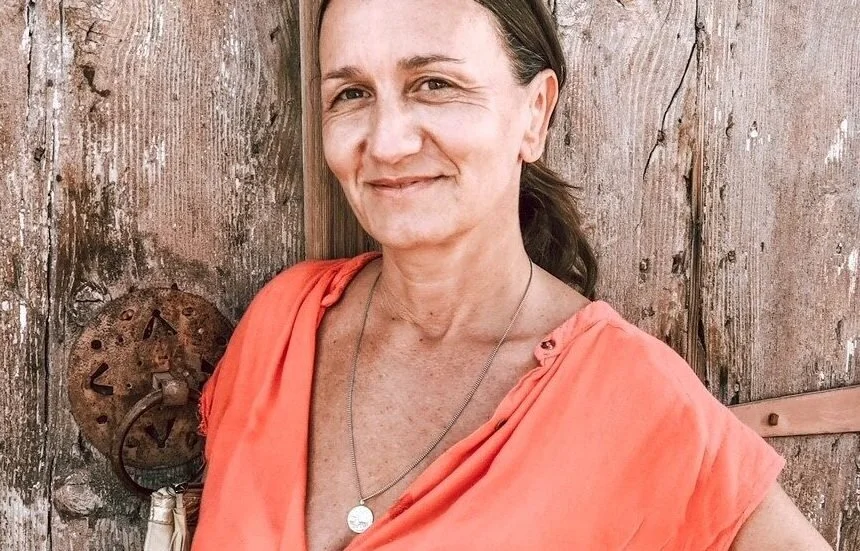
Sophie Parienti is a relationship and communication coach who works with individuals and couples navigating conflict, communication breakdowns, infidelity, separation and relationship decisions. Her approach focuses on helping people see the patterns underneath their conflicts and develop clearer, more conscious ways of relating.
